
New Lawns That Root Into the Ground
Sod Installation & Soil Prep in Summerville for newly graded building sites and compacted yards on rural lots that need soil loosened before sod goes down
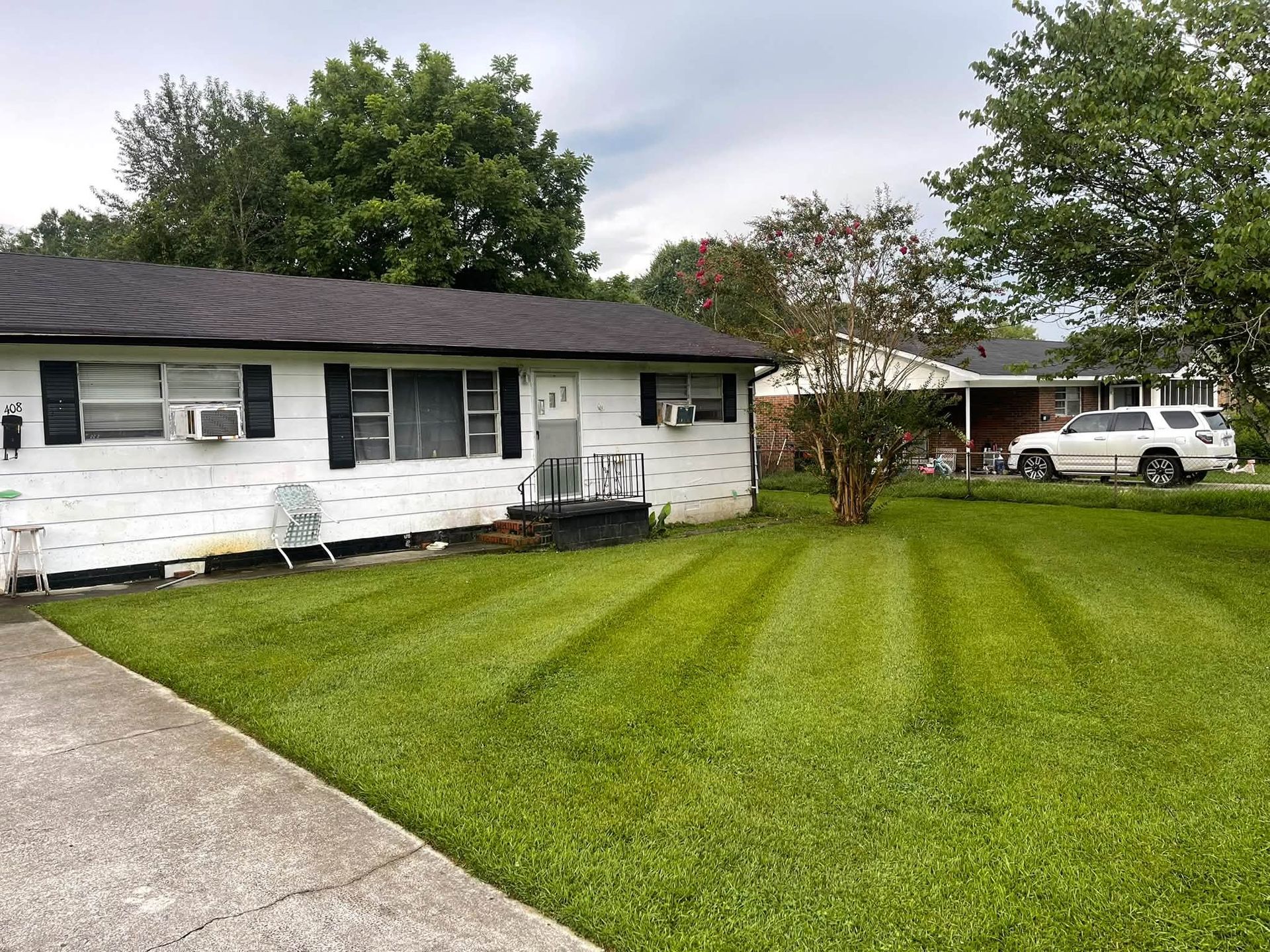
Newly graded building sites and compacted yards on rural lots in Calhoun and Rome fail to establish a new lawn when sod is laid over hard, compacted soil that roots cannot penetrate. The site is cleared and graded to the planned slope, with fill added where needed, then compacted soil is loosened, leveled, and raked before sod is laid in staggered rows with the seams pressed tight, watered in, and checked for low spots. Adams Property Works grades and loosens the soil before laying sod so the new lawn roots into the ground beneath it, and clearing and grading on rural lots and building sites is a core part of the crew's work, so soil prep is handled in-house.
Customers are told the watering schedule for the first few weeks, which is critical for root establishment, and the crew checks for low spots after the sod is laid and adds fill where needed before the lawn is watered in. Compacted soil is loosened with a tiller or similar equipment so roots can penetrate below the sod layer and anchor into the soil beneath.
Request an estimate that breaks out soil prep from the sod itself so you know what work is included before the job starts.
Why Soil Prep Works for New Lawns
Compacted soil is common on building sites where heavy equipment has driven over the yard, and on rural lots where fill dirt was spread without being loosened afterward. The crew loosens compacted soil to a depth of several inches, levels it to match the planned slope, and rakes it smooth so the sod lays flat without gaps or humps that create uneven watering and settling.
After installation, the sod is uniform in color and texture, seams are tight and staggered so they don't align in long rows, and the lawn is level without low spots that collect water or high spots that dry out faster than the rest of the yard. Roots penetrate into the loosened soil beneath the sod within the first few weeks, and the lawn anchors into the ground rather than sitting on top of a hard layer that prevents root growth.
Sod is laid in staggered rows with the seams pressed tight, similar to how bricks are laid, which prevents the seams from opening as the soil settles and the sod roots in.
What Property Owners Ask About the Work
Customers with newly graded sites and compacted yards often ask about soil prep and what happens after the sod is laid.
Why does compacted soil need to be loosened before sod is laid?
Compacted soil is too hard for roots to penetrate, so the new lawn sits on top of the soil rather than rooting into it, which causes the sod to dry out quickly and fail to anchor into the ground.
How is the site graded before sod installation?
The crew clears debris and grades the site to the planned slope, adds fill where low spots need to be raised, and levels the soil so water drains away from structures rather than pooling near foundations or in the middle of the yard.
What does staggering the sod rows accomplish?
Staggering the rows prevents seams from aligning in long, continuous lines, which reduces the chance of seams opening as the soil settles and the sod roots in, similar to how bricks are laid.
How often should new sod be watered in the first few weeks?
The crew provides a watering schedule at the end of the job, typically daily watering for the first week and then less frequent watering as the roots establish, but the schedule depends on weather and soil conditions at the time of installation.
What does checking for low spots after sod is laid prevent?
Low spots collect water and stay wet longer than the rest of the yard, which causes the sod to rot or develop fungal issues, so the crew adds fill to low spots before watering the lawn in.
Adams Property Works also installs sod and prepares soil in Rome, Trion, Lafayette, Chattanooga, and Calhoun. Ask for an estimate that breaks out soil prep from the sod itself, and the crew will review the grading plan and watering schedule during the site visit.